What Happens Between a Ship’s Arrival and Its Departure
A ship’s time in port follows a practical sequence, from berth assignment and cargo work to inspections, supplies, and departure coordination, with local variation.
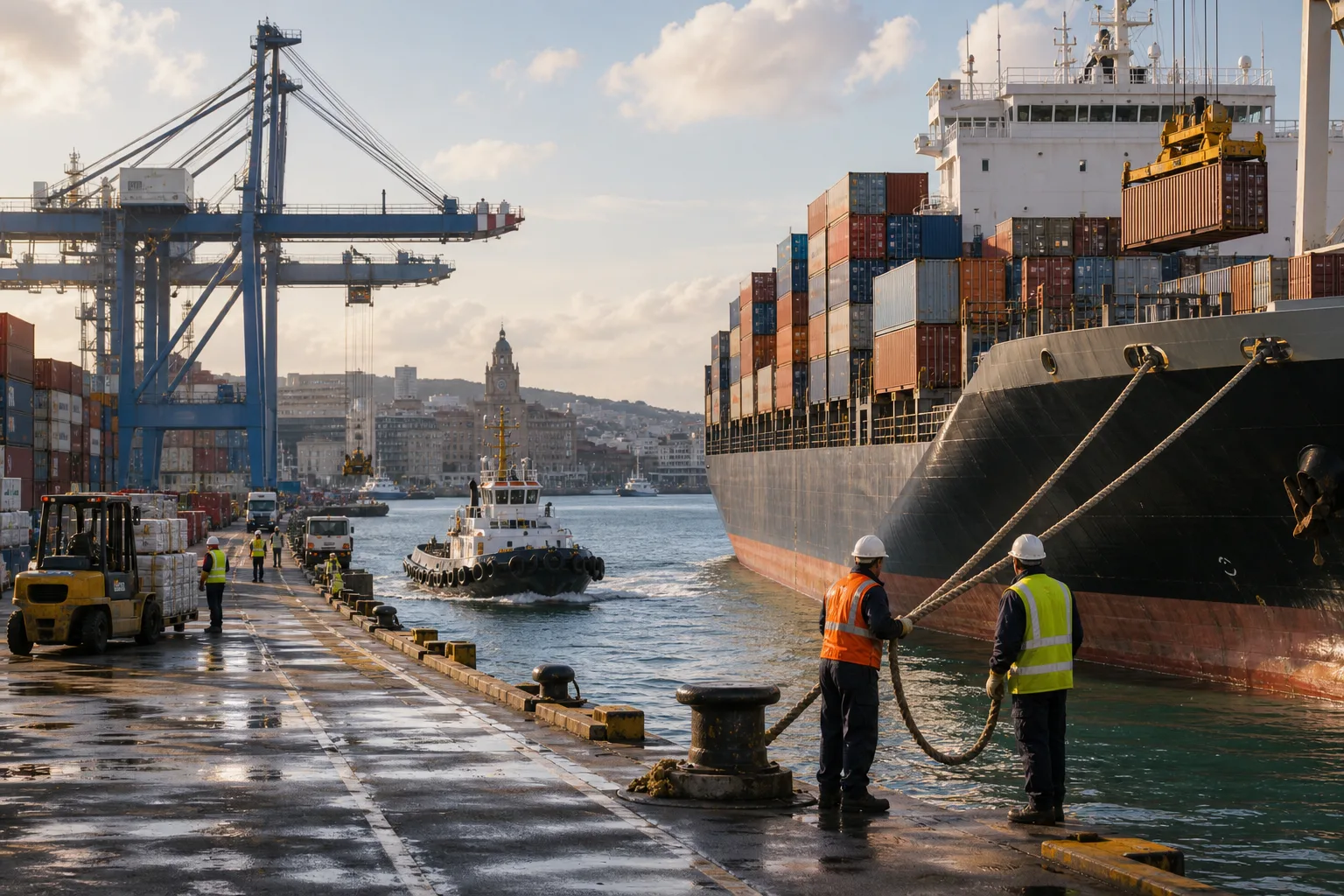
A pilot boat crosses the harbor entrance while a container ship’s bridge team checks its latest berth instructions. That is one visible part of a ship’s time in port: the rest depends on cargo, services, local procedures, and coordination among the vessel and the waterfront businesses around it.
Before the berth
An arriving vessel’s agent commonly passes information between the ship, terminal, port authority, and service providers. Depending on the port and voyage, the information may cover arrival timing, cargo, crew needs, or requests for pilotage and tug assistance.
Plans can shift before the vessel reaches the harbor. Traffic, weather, water conditions, terminal readiness, or another vessel’s movements may affect the assigned berth or arrival window. The bridge team works from current instructions, while the agent relays changes to the people arranging shore-side work.
Where local practice calls for it, a pilot boards to advise the master about the harbor’s channels, traffic, and maneuvering conditions. Pilotage requirements and arrangements vary by port and vessel. Tugs may assist with movement in confined water when required or arranged under local procedures.
Alongside the quay
Berthing brings ship and shore crews into a coordinated operation. Deck crew handle mooring lines as the vessel comes alongside, communicating with the bridge and shore personnel. Lines are secured to bollards or other fittings and tended as the vessel’s position or loading condition changes.
Access between ship and shore is managed under the terminal’s and vessel’s procedures. A gangway may be placed once conditions allow, and workers or visitors may need authorization or protective equipment. The crew and terminal personnel coordinate safe access for the work planned at the berth.
Responsibilities are shared but not identical. Terminal operators manage the quay and cargo equipment; ship’s officers oversee the vessel and coordinate shipboard work; agents, inspectors, and service crews handle particular tasks. Contracts, cargo type, local rules, and terminal procedures shape the division of duties.
Cargo and services
Cargo operations give many port calls their rhythm. Container terminals use cranes to transfer containers between ship and shore, with trucks, rail cars, or yard tractors moving them through the terminal. Bulk cargo may pass by conveyor, grab, or pipeline, while general cargo can require lifting equipment and careful handling of individual items.
Before operations begin, ship and terminal personnel coordinate the work plan, communications, equipment, and cargo-specific hazards. Loading and unloading must account for the vessel’s condition as well as the terminal’s plan. If a discrepancy, damage, or equipment problem arises, the responsible parties follow their procedures to pause or adjust the work.
Fuel, water, provisions, spare parts, waste removal, maintenance, crew changes, and inspections may also be arranged during a call. Their timing depends on the vessel’s schedule, access conditions, and applicable requirements; not every service is available or appropriate at every berth.
Documents and inspections
Port calls involve paperwork alongside machinery. An agent may coordinate submissions and services, while customs, immigration, port health, or other authorities have roles depending on the voyage and jurisdiction. Some formalities are handled before arrival and others after the vessel is alongside.
Authorities may inspect the vessel, cargo, or crew documents under the rules that apply. Ship’s officers arrange access and provide requested records. If an issue requires attention, the vessel and relevant port parties follow the responsible authority’s directions and applicable procedures.
Imagine a fictional harbor where a crane becomes unavailable partway through unloading. The terminal informs the agent and ship’s officers; they revise the cargo sequence and confirm what equipment can be used instead. The observable result is an updated work plan and a departure estimate that may change, rather than a fixed delay assumed in advance.
Departure preparation
As cargo work winds down, the ship’s officers prepare for the next passage. They account for completed or remaining cargo work, review the vessel’s condition, and check the supplies and documents needed for the voyage. The bridge team reviews the route and current harbor instructions; the deck crew prepares mooring equipment for letting go.
Departure arrangements vary with the port, vessel, and applicable rules. An agent may coordinate formalities and pass along schedule updates, while the terminal and port coordinate berth availability and traffic. Pilotage, tugs, clearances, and other requirements depend on local procedures and the vessel’s circumstances.
The master and bridge team proceed in accordance with their responsibilities and the relevant port directions, clearances, and service arrangements. If any required permission or operational arrangement remains unresolved, the parties address it through the applicable local process before departure. When the departure plan is in place, deck crew release lines in an agreed sequence while communicating with the bridge and shore personnel.
Departure questions?
Who authorizes a ship to leave?
There is no single answer that applies to every port or vessel. The master is responsible for the vessel’s operation, while required clearances, port directions, pilot arrangements, and traffic coordination are governed by the applicable rules and local procedures.
Does every ship use a harbor pilot?
No single pilotage rule applies everywhere. Requirements and exemptions depend on the port, vessel, and circumstances, so the relevant port authority or vessel’s agent can identify the local arrangements.
What can change a ship’s departure time?
Unfinished cargo work, documentation, inspections, weather, traffic, berth availability, and service arrangements can all affect timing. The ship and port parties communicate updates, but an estimate may change as conditions and requirements are confirmed.
A port call’s rhythm
A ship’s time in port is a connected set of activities: approach and berthing, cargo and services, required formalities, and preparation to leave. The sequence is shaped by the vessel’s work and the harbor’s procedures, not by a universal timetable. For the exact requirements at a particular harbor, consult its current vessel guidance and the relevant terminal instructions; those local sources clarify what applies to that call.
More harbor reading
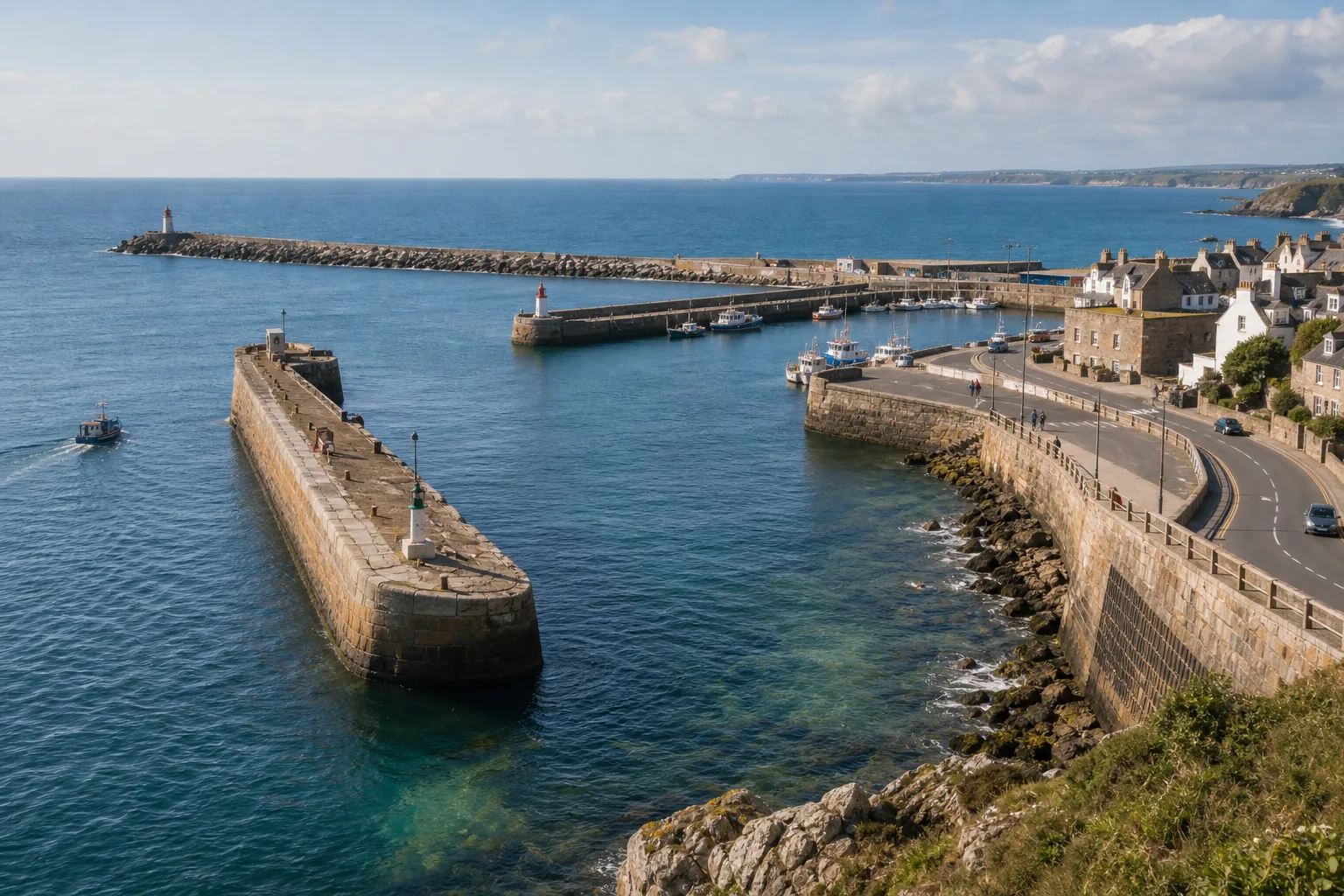
Breakwater, Mole, or Seawall: Three Edges Built for Different Jobs
Breakwater, mole, or seawall: learn how position, shoreline connections, and harbor surroundings help you describe each…
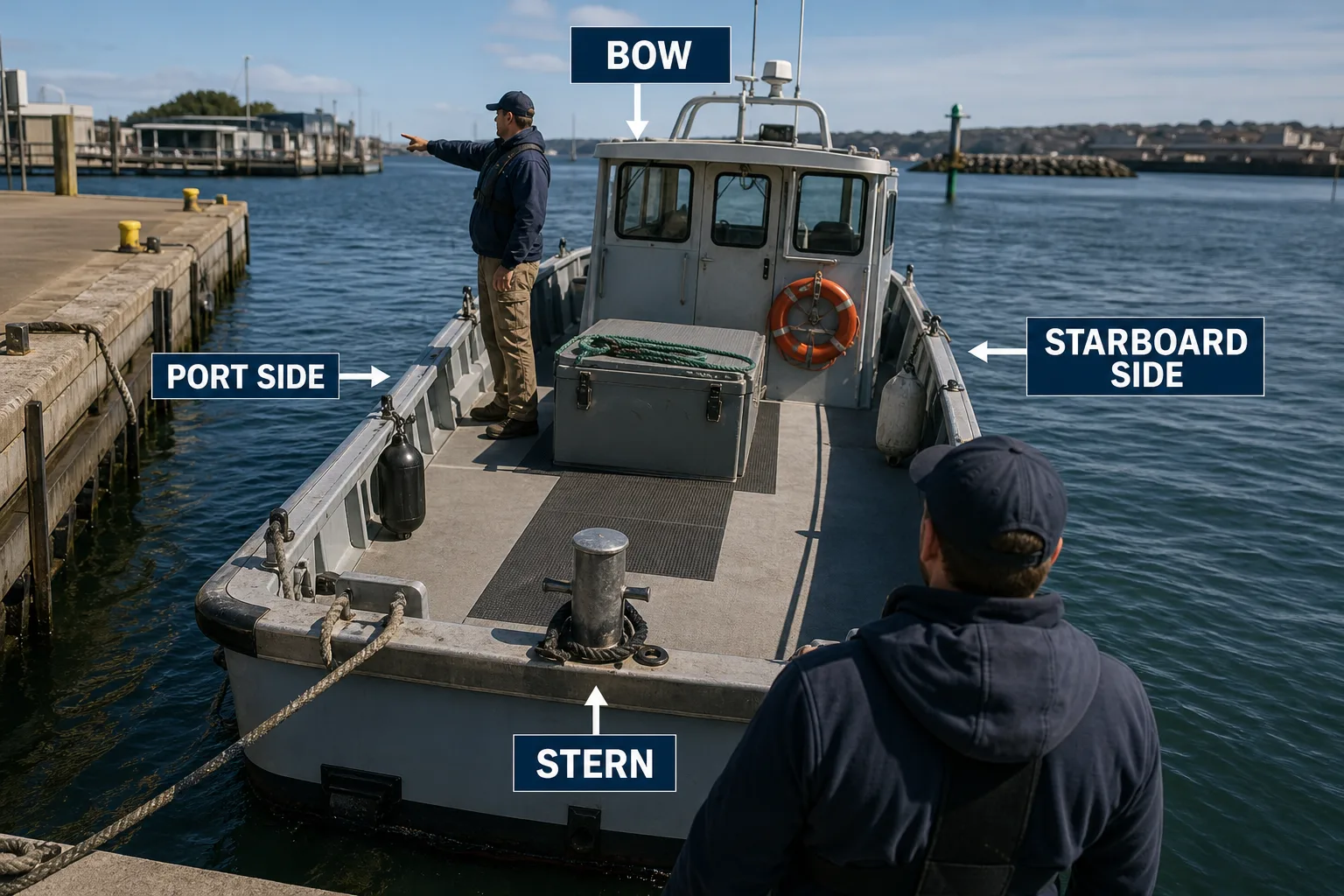
Bow, Stern, Port, and Starboard: A Clear Map of a Vessel
Learn bow, stern, port, and starboard from a vessel’s own orientation, so dockside directions stay clear…